
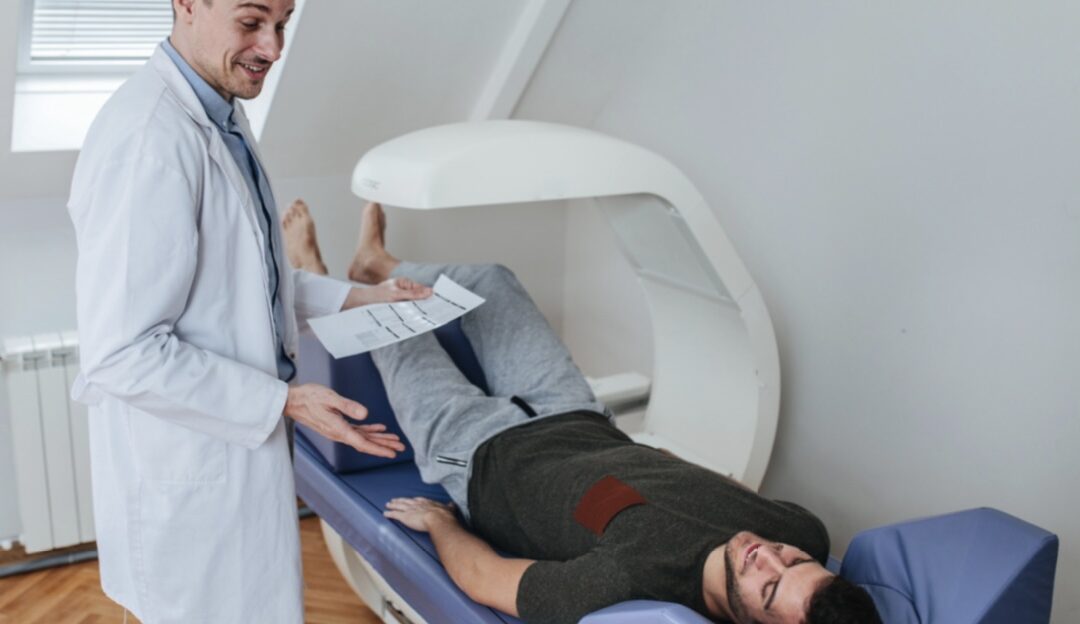
Osteoporosis, often called the “silent disease,” affects millions of people worldwide, particularly postmenopausal women and the elderly. Characterized by weakened bones and an increased risk of fractures, osteoporosis can progress unnoticed for years until a break occurs. Early detection is crucial for preventing these debilitating outcomes, and one of the most effective tools available for this purpose is Dual-Energy X-ray Absorptiometry, or DXA (also known as DEXA).
Osteoporosis is a condition in which bones become brittle and porous due to loss of bone mass and structural deterioration. Normally, bones are in a constant state of renewal — old bone is broken down and new bone is created. However, when the creation of new bone doesn’t keep up with the removal of old bone, bone density decreases. This can lead to a heightened risk of fractures, particularly in the hip, spine, and wrist.
Risk factors include aging, hormonal changes (especially reduced estrogen levels in women after menopause), a family history of the disease, certain medications, and lifestyle choices such as smoking, excessive alcohol consumption, and lack of physical activity.

Why Early Detection Matters
Early detection of osteoporosis can make a significant difference in how the disease is managed and in reducing the risk of future fractures. If osteoporosis is identified before a fracture occurs, lifestyle changes, medications, and other interventions can be implemented to slow bone loss and strengthen existing bone. Unfortunately, because osteoporosis often has no symptoms in its early stages, it frequently goes undiagnosed until a fracture happens.
This is where DXA comes in — it provides a reliable, painless, and non-invasive way to assess bone density and evaluate an individual’s risk of developing osteoporosis.
What is a DXA Scan?
Dual-Energy X-ray Absorptiometry (DXA) is the most commonly used and widely accepted method for measuring bone mineral density (BMD). It uses a very low dose of X-rays to determine bone density in specific areas of the body, usually the hip and spine, where fractures are most likely to occur due to osteoporosis.
During a DXA scan, the patient lies on a padded table while a scanning arm passes over the body. The test typically takes about 10 to 30 minutes, and patients can remain fully clothed. It is quick, painless, and exposes patients to only a minimal amount of radiation — much less than a standard chest X-ray.
Who Should Get a DXA Scan?
The U.S. Preventive Services Task Force recommends BMD testing for:
Women aged 65 and older.
Postmenopausal women younger than 65 who have risk factors for osteoporosis.
Men aged 70 and older, or younger men with risk factors such as family history, previous fractures, or certain medical conditions.
Healthcare providers may also recommend a DXA scan if a patient has experienced a bone fracture from a minor injury, has been taking medications that affect bone health (like corticosteroids), or has conditions such as rheumatoid arthritis or low body weight.

Plus size women making sport and fitness. Studio portraits with multiethnic curvy girls
Interpreting DXA Results
DXA results are usually reported using T-scores and Z-scores:
T-score compares your bone density to the optimal peak bone density of a healthy young adult of the same sex. A T-score of:
-1.0 or above is considered normal
Between -1.0 and -2.5 indicates low bone mass (osteopenia)
-2.5 or lower indicates osteoporosis
Z-score compares your bone density to what’s expected for someone of your age, sex, and size. This score is often used for younger individuals, men under 50, and children.
These scores help healthcare providers determine the appropriate course of action, whether it’s monitoring, lifestyle changes, or starting medication.
Preventing and Managing Osteoporosis
If a DXA scan indicates low bone density, several steps can be taken to prevent further bone loss:
Nutrition: Ensure adequate intake of calcium and vitamin D.
Exercise: Engage in weight-bearing and resistance-training exercises to strengthen bones.
Lifestyle Changes: Quit smoking and limit alcohol intake.
Medications: Depending on severity, doctors may prescribe bisphosphonates or other osteoporosis-specific drugs.
Regular follow-up DXA scans (typically every 1-2 years) help track bone density changes and assess the effectiveness of treatment.
Final Thoughts
Osteoporosis doesn’t have to be an inevitable part of aging. Through early detection with a DXA scan, individuals at risk can take proactive steps to protect their bone health and maintain an active, fracture-free life. If you’re in a higher-risk group or concerned about your bone health, talk to your healthcare provider about whether a DXA scan might be right for you.
Taking action today could mean avoiding fractures tomorrow — and preserving your independence and quality of life for years to come.
Schedule Your Appointment Today
Schedule your DXA scan at DXA Body Composition NC. And take the first proactive step towards understanding and optimizing your health. Our process is quick, painless, and performed on an outpatient basis. The machines we use are comfortable and open, ensuring a stress-free experience.
Don’t let your health journey be a mystery; let DXA Body Composition NC be your guide. Take the next step by scheduling your DXA scan appointment. Contact us today to discover the precision, accuracy, and personalized insights that will propel you toward your health and fitness goals. Your journey to optimal well-being starts here.